Sillage Perfume What It Means, How It Works, and How to Improve It
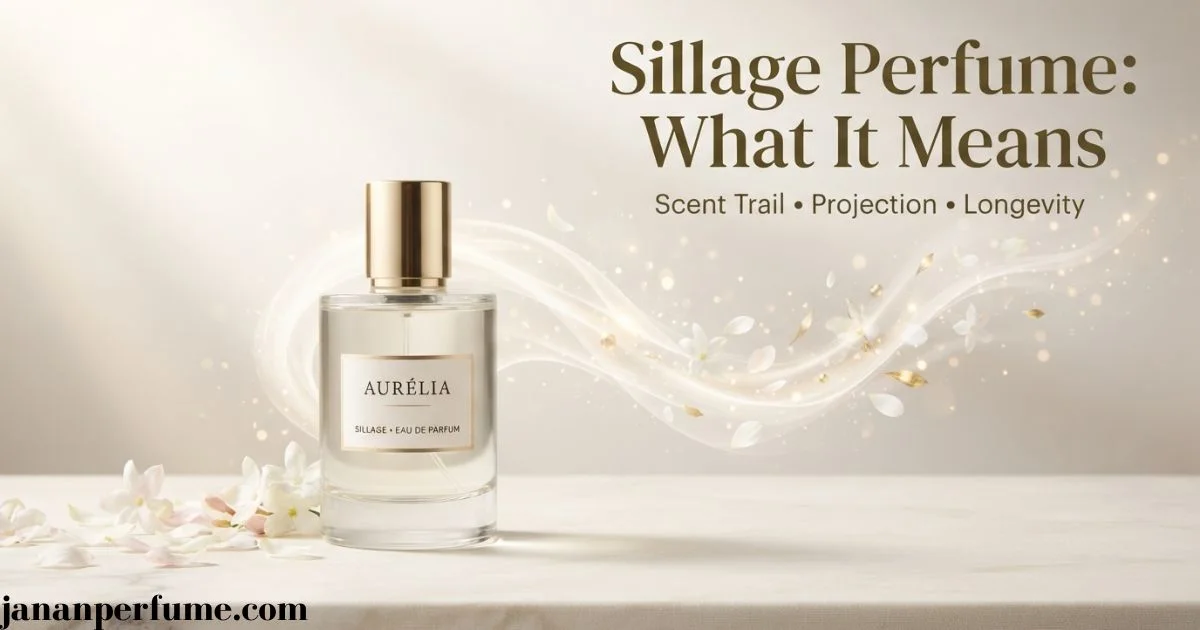
A sillage perfume is a fragrance that leaves a noticeable scent trail behind the wearer as they move. In simple terms, sillage is the invisible “wake” of fragrance someone may notice after you have walked past. It is different from projection, which describes how far scent radiates around you, and longevity, which describes how long the fragrance remains detectable.
Understanding sillage changed the way I evaluate perfume performance. Instead of asking only whether a fragrance is “strong,” I look at its scent trail, projection, longevity, fragrance notes, concentration, skin chemistry, weather, and application. Once you understand those relationships, choosing a signature scent becomes much easier and you can avoid overspraying simply because a fragrance seems quiet to you.
What Does Sillage Mean in Perfume?
Sillage is the scented trail a perfume leaves in the air as the wearer moves through a space. The word comes from French and originally refers to the wake left behind by a moving boat. In fragrance, it describes what remains in your wake rather than simply what you smell directly on your skin.
Imagine walking through a hotel lobby wearing a beautiful fragrance. Someone enters the same area a few moments later and notices a soft trace of vanilla, musk, amber, or woods. That lingering impression is sillage. A fragrance with strong sillage leaves a more noticeable trail, while soft sillage remains intimate and easier to miss.
Sillage Definition Explained
The easiest way to remember the sillage definition is to think about movement. Projection describes the fragrance surrounding you at a particular moment, while sillage describes the trail created as you move. Longevity is different again because it measures how long the fragrance remains detectable rather than how far its trail travels.
This distinction matters when reading perfume reviews. A fragrance described as “long-lasting” may remain on skin for many hours without leaving a large trail. Another perfume may create impressive projection and sillage during its opening but become quiet later. Neither result automatically means the fragrance is better or worse.
Sillage vs Projection vs Longevity
Sillage, projection, and longevity are three related but separate parts of perfume performance. Sillage is the trail, projection is the reach, and longevity is the duration. Thinking about them separately makes fragrance reviews much easier to understand and helps you choose a perfume based on the performance you actually want.
| Performance term | What it means | Simple question |
| Sillage | Scent trail left during movement | Can someone smell my trail after I pass? |
| Projection | Distance fragrance radiates around you | How far can people smell me right now? |
| Longevity | How long fragrance remains detectable | How long does the scent last? |
A perfume can perform differently across all three categories. You might have excellent longevity with minimal sillage, or strong projection during the first hour followed by a quiet skin scent. Current fragrance guides consistently emphasize that these measurements should not be treated as interchangeable.
What Determines a Perfume’s Sillage?
A perfume’s sillage depends on its formulation, aroma materials, concentration, skin, body temperature, climate, movement, and application. Heavy woods, amber, musk, resins, and certain floral materials can contribute to a pronounced trail, while bright citrus and green notes often make a more immediate but shorter-lived impression.
Your own skin is also part of the equation. Moisture, natural oils, temperature, and individual skin chemistry can change how fragrance develops. Weather matters too: warm conditions generally increase evaporation and diffusion, while colder conditions can make a fragrance feel quieter. That is why the same bottle can behave differently from one person or season to another.
Fragrance Concentration (EDP vs EDT)
Eau de Parfum, Eau de Toilette, parfum, and extrait describe different fragrance concentration categories, but concentration alone does not guarantee stronger sillage. Formula design and the materials used can be just as important. An EDP may create a generous trail, while a highly concentrated perfume can sometimes remain surprisingly close to skin.
Ingredients and Notes
The ingredients in a perfume strongly influence how its scent develops and travels. Woods, amber, musk, resins, patchouli, and some white florals are commonly associated with substantial fragrance presence. Citrus and green notes can create a beautiful opening, but their more volatile character often makes them less dominant in the later scent trail.
Skin Type and Skin Chemistry
Skin chemistry helps explain why one perfume smells powerful on one person and much softer on another. Dry skin may make fragrance feel shorter-lived, while moisturized skin can provide a better surface for fragrance to remain perceptible. Your natural skin characteristics can also influence the final smell of the composition.
Weather and Climate
Temperature and airflow affect fragrance diffusion. Warm weather can make a perfume feel more noticeable because heat encourages fragrance materials to evaporate into the surrounding air. Cold weather generally slows diffusion. This is why a fragrance that feels perfectly balanced indoors during winter may become surprisingly powerful outdoors during a hot summer day.
Application Method
Application affects the amount of fragrance available to diffuse and where the scent trail develops. Pulse points such as the neck and wrists are common application areas because warmth can help release aroma. Clothing may retain scent longer, but delicate fabrics should always be treated cautiously because perfume can discolor some materials.
Which Perfume Notes Have the Strongest Sillage?
There is no universal list of ingredients that guarantees maximum sillage, because the final effect depends on the complete formulation. However, oud, amber, musk, vanilla, patchouli, woods, and powerful white florals are frequently associated with noticeable fragrance trails. Their character can remain perceptible as the fragrance develops beyond its opening.
For example, oud can create a dark, woody presence, while amber can provide warmth and diffusion. Musk may create a lingering skin-like aura, and vanilla can add a soft gourmand trail. Jasmine and tuberose can also be highly noticeable. The important point is that the entire composition matters more than any single note.
Oud
Oud is often associated with rich, powerful fragrance profiles and can contribute to substantial sillage when used prominently in a composition. Depending on the formulation, it may smell woody, smoky, leathery, resinous, or slightly medicinal. Oud perfumes are especially popular among wearers seeking a distinctive trail.
Amber
Amber-style accords add warmth, sweetness, resinous depth, and richness to many fragrances. In a perfume with a strong amber foundation, the scent may continue to feel present well after the brighter opening notes have faded. Amber can therefore contribute to a warm, enveloping style of sillage.
Musk
Musk can provide a persistent, soft, clean, or sensual foundation depending on the materials used. Modern perfumes may use synthetic musks rather than traditional animal-derived musk. These materials can contribute to diffusion and a lingering impression while helping connect the fragrance’s heart and base.
Vanilla
Vanilla is a popular gourmand and warm fragrance note that can create an inviting scent trail. It frequently appears alongside amber, woods, musk, coffee, caramel, or spices. A vanilla-heavy perfume may feel especially noticeable in cooler weather, although individual formulas vary considerably.
Patchouli
Patchouli contributes earthy, woody, aromatic depth and is often used in fragrances that need a substantial base. It can appear in masculine, feminine, and unisex compositions. Depending on the formulation, patchouli may smell earthy and dark or cleaner and more polished.
White Florals
Jasmine and tuberose are examples of white florals that can have impressive olfactory presence. Their aromas can feel creamy, heady, fresh, or sweet depending on the formula. White-floral perfumes do not need heavy woods to create noticeable sillage; floral diffusion itself can be powerful.
Does EDP Have Better Sillage Than EDT?
Eau de Parfum is often associated with stronger overall performance than Eau de Toilette, but it is inaccurate to assume that every EDP automatically has better sillage. Fragrance concentration is only one variable. The composition, aroma materials, volatility, application, skin, and environment can all influence the scent trail.
When comparing an EDP and EDT version of a fragrance, test both rather than relying on the label. One may open more brightly while the other feels denser and warmer. The EDT might even create impressive initial diffusion despite having a lighter concentration. Performance should be evaluated from the actual fragrance, not the concentration category alone.
| Feature | EDP | EDT |
| General concentration | Usually higher | Usually lower |
| Typical character | Often richer | Often lighter or brighter |
| Sillage | Can be strong | Can also be strong |
| Longevity | Often longer, but not guaranteed | Often shorter, but not guaranteed |
| Best approach | Test the actual formula | Test the actual formula |
How to Test the Sillage of a Perfume
The most useful sillage test is not repeatedly smelling your wrist. Instead, apply the perfume normally, allow it to develop, then move through a space and ask someone else whether they notice a trail. Because your nose becomes accustomed to a familiar fragrance, other people can sometimes evaluate your sillage more accurately than you can.
A simple walk-by test can provide useful information. Spray a controlled amount, wait for the opening to settle, walk past a friend, and ask what they detected. Repeat at different stages of wear. This gives you a better picture of the actual trail instead of relying on a first impression.
The Walk-By Test
Apply your fragrance consistently and allow it to settle before testing. Walk past someone at a normal pace and ask whether they noticed a fragrance trail after you passed. Repeat later during the dry-down. This helps separate initial projection from the lingering trail that defines sillage.
Ask Friends for Feedback
Friends can help identify fragrance performance that you no longer notice yourself. Ask specific questions rather than simply asking whether the perfume is “strong.” For example, ask whether they smelled anything after you walked past, how noticeable it was, and whether the trail felt pleasant or overwhelming.
Observe the Scent Trail After Leaving a Room
Another practical test is to leave a room and return later. If someone can still detect a trace of your fragrance in the space, your perfume has created measurable environmental presence. This does not provide a laboratory measurement, but it can help you understand real-world sillage.
How to Improve Perfume Sillage
Improving sillage does not mean spraying as much perfume as possible. Start with the fragrance itself, then optimize skin preparation, application, and layering. Moisturized skin, appropriate pulse-point application, suitable clothing, and compatible scented products can help create a more noticeable trail without turning the fragrance into an overpowering cloud.
It is also important to remember that fragrance etiquette matters. A strong trail may be enjoyable at an outdoor evening event but inappropriate in an elevator, airplane, classroom, medical setting, or small office. The goal is not maximum sillage at all times; it is the right amount for the environment.
Moisturize Your Skin First
A fragrance-friendly moisturizer can give perfume a better surface to remain on, particularly when skin is very dry. Choose an unscented lotion if you want the perfume itself to remain the focus. This simple preparation can improve the consistency of fragrance wear without changing the scent profile dramatically.
Apply on Pulse Points
Common pulse-point areas include the neck, wrists, and inner elbows. These areas are frequently used because body warmth can assist fragrance diffusion. Avoid excessive application simply because you want stronger sillage. A controlled number of sprays usually gives a cleaner and more comfortable result.
Spray on Clothes Carefully
Fabric can retain fragrance differently from skin, which may extend the detectable trail. However, not every fabric reacts well to perfume. Test an inconspicuous area first, especially with silk, satin, delicate embroidery, or dark fabrics that could show marks.
Layer Matching Fragrances
Layering can increase the overall presence of a scent when compatible products are used. A matching body lotion, shower product, body mist, or fragrance oil can create several scented layers. Keep the combinations harmonious; too many competing fragrances can muddy the original composition.
Choose Higher Concentration Perfumes
Higher concentration products may offer greater intensity or persistence, but they are not automatically guaranteed to have stronger sillage. Look at the entire formula. A well-designed EDP or extrait containing diffusive materials may perform beautifully, while another highly concentrated perfume can remain surprisingly intimate.
Strong vs Soft Sillage Which Is Better?
There is no universally correct level of sillage. Strong sillage can create a memorable presence at weddings, parties, evening events, and outdoor gatherings. Moderate sillage often works well for everyday use. Soft sillage can be preferable in offices, airplanes, classrooms, intimate dinners, and other close-contact environments.
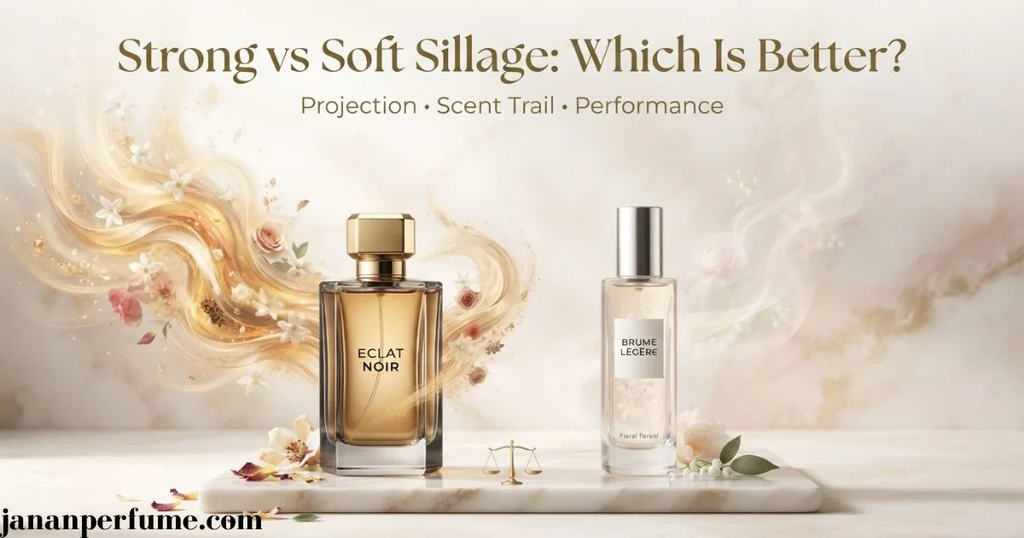
The most sophisticated approach is to match fragrance performance with context. A scent that feels impressive in an open room can become overwhelming inside a small elevator. Likewise, a subtle skin scent that seems too quiet for a wedding may be perfect for a workday. Good fragrance etiquette is about balance, not maximum strength.
When Strong Sillage Is Ideal
Strong sillage can work beautifully for weddings, celebrations, evening events, and spacious outdoor settings. These environments give fragrance more room to diffuse. Rich woody, amber, spicy, gourmand, and oud-based compositions can create an especially memorable trail when applied with restraint.
When Moderate Sillage Works Best
Moderate sillage is a practical choice for everyday wear. It can provide enough presence for coworkers, friends, and people nearby to notice without dominating the surrounding space. Fresh woods, aromatic fragrances, balanced florals, and versatile amber compositions can all work well at this level.
When Low Sillage Is Preferred
Low sillage can be the considerate choice in airplanes, hospitals, classrooms, small offices, elevators, and other enclosed environments. It is also ideal for people who prefer intimate fragrance. A close skin scent can still have excellent longevity and beautiful character without creating a large scent trail.
Conclusion
A sillage perfume is ultimately about the trail your fragrance leaves behind as you move not simply how loud the opening smells or how many hours the bottle lasts on skin. The most useful way to evaluate fragrance performance is to separate sillage, projection, and longevity, then consider concentration, ingredients, skin chemistry, climate, and application.
If you want a memorable fragrance trail, look beyond marketing phrases such as “beast mode.” Test the perfume on skin, ask someone else for feedback, and wear it in the environment where you actually plan to use it. The best sillage perfume is not necessarily the strongest one; it is the one that creates the right impression at the right time.
FAQ Section
What does sillage mean in perfume?
Sillage is the scent trail a perfume leaves behind as the wearer moves. It describes the fragrance lingering in the air after someone passes, rather than simply how strongly the perfume smells directly on the skin.
Is sillage the same as projection?
No. Projection describes how far a fragrance radiates around the wearer at a particular moment, while sillage describes the trail left behind as the wearer moves. A perfume can have strong projection but relatively soft sillage.
Is sillage the same as longevity?
No. Longevity measures how long a fragrance remains detectable, while sillage describes the trail it leaves during movement. A perfume can last many hours close to the skin while having relatively little sillage.
What perfume has the strongest sillage?
There is no universally strongest perfume because sillage depends on formulation, application, skin, climate, and environment. Fragrances featuring materials such as oud, amber, musk, woods, patchouli, and some white florals are commonly associated with substantial scent trails.
Does skin type affect perfume sillage?
Yes. Skin moisture, natural oils, temperature, and individual skin chemistry can affect fragrance behavior. Moisturized skin may help fragrance remain perceptible, but individual results vary, so testing the perfume on your own skin is more reliable than assuming how it will perform from another person’s experience.
How can I increase perfume sillage?
Apply a controlled amount to moisturized skin, use suitable pulse points, consider compatible fragrance layering, and choose a formulation designed for greater diffusion. Avoid simply overspraying, because more perfume does not necessarily create better fragrance etiquette or a more attractive trail.
Is strong sillage better?
Not necessarily. Strong sillage can be excellent for parties, weddings, and outdoor events, while moderate or soft sillage may be more appropriate for offices, flights, classrooms, and small enclosed spaces. The best level depends on your environment and personal preference.
Does EDP always have better sillage than EDT?
No. EDP often has a higher fragrance concentration, but concentration alone does not guarantee stronger sillage. Formula composition, aroma materials, application, skin, temperature, and airflow all influence how a perfume actually performs.